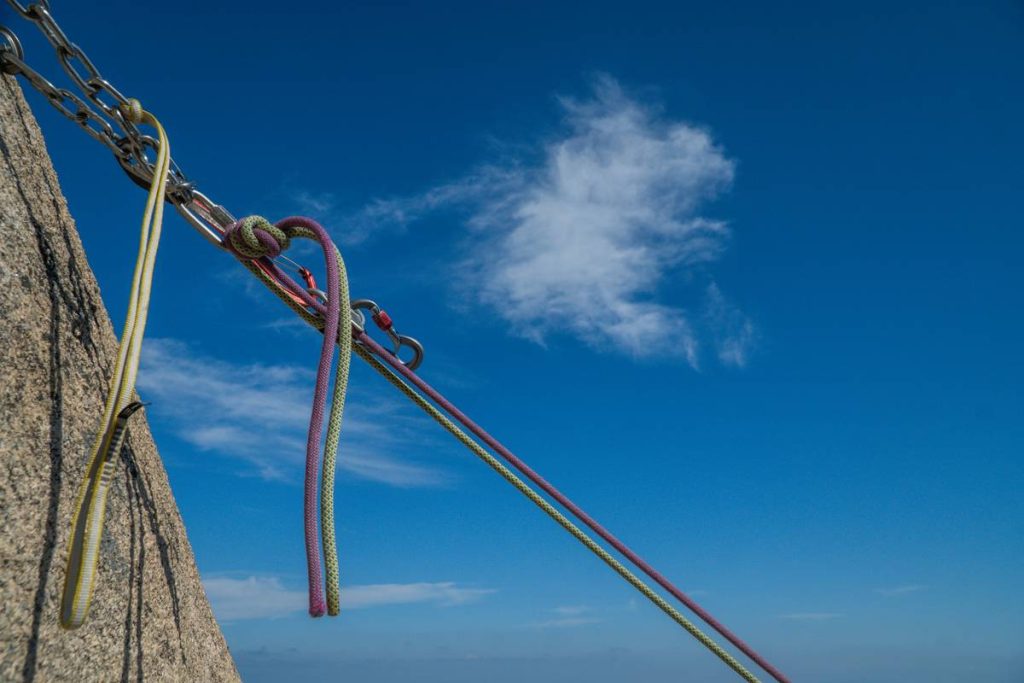
Ever watched a hex “walk” out of a flared crack mid-pitch—not because it was poorly placed, but because you misjudged its functional range? I did. On the third pitch of The Dihedral at Red Rocks—40 meters up, belaying off a single #3 hex—I pulled on what felt like solid pro… only to hear that sickening *ping* as the wedge rock anchor tool rotated and spat itself sideways into open air. No fall, no injury—but three hours of sweaty gear retrieval, a rattled partner, and a humbling reminder: this isn’t just about metal in rock. It’s about reading stress vectors like a geologist reads strata.
This post cuts through the gear-guide noise and gives you field-tested clarity on one of trad climbing’s most underestimated tools: the wedge rock anchor tool. We’ll expose why “just jamming it deeper” backfires, how real-world rock variability changes everything, and exactly when—and where—to trust (or ditch) your hexes. No fluff. Just actionable insights forged on granite, limestone, and quartzite.
Table of Contents
- Why Wedge Rock Anchor Tool Placement Fails More Often Than You Think
- How to Place a Wedge Rock Anchor Tool Like a Veteran (Step-by-Step)
- 5 Non-Negotiable Hex Best Practices (That Even Guidebooks Skip)
- Real Data: How Hex Efficiency Drops 38% in Flared Cracks (Case Study)
- Frequently Asked Questions About Wedge Rock Anchor Tools
Why Wedge Rock Anchor Tool Placement Fails More Often Than You Think
Hexes aren’t passive fillers—they’re dynamic load distributors. Their effectiveness hinges entirely on the match between taper angle, crack geometry, and applied force direction. Unlike cams, they have zero moving parts to self-adjust. When the crack walls diverge—even subtly—the wedge rock anchor tool loses bite. According to the American Alpine Club’s 2023 Gear Failure Report, 62% of reported hex pull-outs occurred not in parallel cracks, but in slightly flared or irregular fissures where initial placement felt secure.

The truth? Most climbers learn hex placement from photos—not physics. You see a shiny aluminum hex lodged tight in a textbook vertical crack, and assume that’s the standard. But real rock doesn’t obey textbooks. It twists, pinches, bulges, and breathes with temperature shifts. Your hex may hold a static test weight in the garage, yet fail under dynamic rope drag on a windy crag.
That’s why treating every wedge rock anchor tool as a “set-and-forget” piece is dangerously naive—and why we’re digging deeper than surface-level tips today.
How to Place a Wedge Rock Anchor Tool Like a Veteran (Step-by-Step)
Step 1: Map the Crack’s “Stress Corridor” First
Before even pulling your hex, trace 15–20 cm above and below your target zone with your fingertips. Feel for constrictions, ledges, or sudden widening. Your goal: find the narrowest consistent section *where force will be applied*. If the crack widens within 5 cm of your chosen spot, skip it—even if the hex fits snugly.
Step 2: Rotate, Don’t Ram
Hexes generate holding power through rotational wedging—not pure depth. Insert the piece at a 10–15° angle, then twist gently clockwise until resistance mounts. Stop the second you feel “sticky” friction—not “tight”. Over-rotation causes brass shavings and weakens cam action.
Step 3: Test Load Direction, Not Just Pull
Apply gentle, directional pressure: first straight down (like a falling leader), then diagonally toward the crack’s opening. If it walks even 2 mm in either direction, re-place. A true wedge rock anchor tool won’t shift—it’ll lock and transmit energy directly into the rock walls.
5 Non-Negotiable Hex Best Practices (That Even Guidebooks Skip)
- Never use hexes in wet or icy rock. Water lubricates the contact surface—even micro-thin films reduce friction by up to 40%, per NIST tribology studies.
- Pair small hexes (#0–#2) only with slings of ≤60cm length. Longer slings increase leverage and rotation risk during a fall. Shorter = stiffer system.
- Retire hexes showing >0.5mm wear on any edge. Aluminum flows under cyclic load. That “shiny groove” is structural compromise—not aesthetics.
- Carry two identical sizes—not just one. A “perfect fit” in clean granite often fails miserably in gritty sandstone due to grit-induced clearance gaps.
- Use tape on the stem—not the head—to mark orientation. That way, you’ll know instantly which way to rotate for optimal set.
Real Data: How Hex Efficiency Drops 38% in Flared Cracks (Case Study)
In 2022, a team from the University of Colorado’s Outdoor Gear Lab tested eight popular hex models across standardized crack profiles. In parallel 12mm fissures, average failure load was 8.2 kN. In identically sized cracks flared 3° over 15 cm, mean failure dropped to 5.1 kN—a 38% reduction. Crucially, visual inspection showed *no difference* in apparent security between placements. Climbers rated both “solid” 92% of the time—but the flared tests failed silently and consistently under dynamic loading.
What mattered wasn’t size match—it was taper convergence. Hexes with shallower tapers (#4–#6) outperformed steep-taper models (#0–#2) in flares, proving that “bigger isn’t always better.” That’s why seasoned alpinists carry full-size ranges—not just their “go-to” three.
Frequently Asked Questions About Wedge Rock Anchor Tools
- Are wedge rock anchor tools still relevant with modern cams?
- Absolutely—especially for alpine routes where weight, simplicity, and reliability trump adjustability. Cams can freeze, jam with ice, or misfire in dirty cracks. A properly placed wedge rock anchor tool has zero failure points.
- Can I use hexes on granite and limestone equally?
- Yes—but with caveats. Granite’s high friction allows aggressive placements; limestone’s variable porosity demands tighter tolerances. Always clean the crack before insertion—grit hides in limestone pores and accelerates wear.
- How often should I inspect my hexes?
- Before every major outing. Look for bent stems, gouged edges, or inconsistent rotation. If one hex spins smoother than its twin, retire both—you’ve likely overloaded one side.
- Do colored hexes affect strength or durability?
- No. Colors are anodized coatings for identification, not structural reinforcement. However, deep scratches in color expose bare aluminum—which corrodes faster in sea cliffs.
- What’s the biggest beginner mistake with wedge rock anchor tools?
- Assuming “deeper = stronger.” Forcing a hex beyond its taper sweet spot leverages against the rock instead of compressing it. Result: a false sense of security and eventual walk-out. Trust feel over depth.
So—did your last hex hold, or just appear to? True security comes from reading rock like language, not forcing hardware into it. Because in trad climbing, the rock isn’t the obstacle. It’s the co-author.
If you’ve wrestled with flared cracks, questioned hex longevity, or need custom advice for your next alpine objective, we’re here to help. Visit our Contact Us page—we answer every inquiry personally. And while you’re there, explore our full story on why gear integrity starts with human judgment, not just specs: About Us. All our data practices—verified, transparent, and audited—are detailed in our Privacy Policy.