
You’re 80 feet up a brittle sandstone face. Your friend placed a hex—it’s all you’ve got for protection. Then it starts to rotate. No camming action. No locking mechanism. Just a wedge of metal sliding toward disaster. Standard passive nuts fail silently—and often catastrophically—on parallel or flared cracks. But what if your “old-school” hex could lock like a cam? That’s where the wedge rock locking device rewrites the rules.
Why Passive Protection Fails Where It Matters Most
Most climbers treat hexes as disposable backups—tossed into a rack because they’re cheap, not because they’re trusted. And honestly? They’re right to be skeptical.
Standard hexes rely solely on constriction. Place one in a slightly flared crack or under dynamic load, and it walks—or worse, pops out clean. Unlike cams, they offer zero active expansion. Zero redundancy. One wrong bounce during a fall, and physics does the rest.
But here’s the irony: hexes are lighter, simpler, and more durable than cams. What if we could give them that missing feature—the ability to lock?
How to Turn Any Hex Into a Wedge Rock Locking Device
You don’t need a new product. You need a smarter technique—one rarely taught outside elite trad circles.
Select the Right Hex for the Crack Profile
Not all hexes behave the same. Oval-shaped units (like the classic DMM Torque) work best in irregular slots. Tubular hexes? Ideal for thin, parallel fissures—if you modify them.
And forget smooth surfaces. Look for knurled edges or add custom grip tape. Friction is your ally.
Use the “Tension-Lock” Method with Sling Integration
Take a dyneema sling—60cm works well. Loop it through the hex’s cable or wire. Then, instead of clipping directly to your rope, tie a figure-eight on a bight at the sling’s midpoint and clip that to your rope.
Under load, the sling pulls the hex deeper while simultaneously applying lateral tension against the crack walls. The result? A pseudo-locking effect that resists rotation and pull-out.
Reinforce with Opposed Placement (When Possible)
In wider cracks, place two identical hexes back-to-back—opposed like stoppers. Connect both with a single sling using the tension-lock method above.
This isn’t just double protection. It’s geometric reinforcement—creating a self-tightening wedge system that mimics cam lobes without moving parts.
| Protection Type | Weight (g) | Cost per Unit ($) | Locking Capability | Best Crack Type |
|---|---|---|---|---|
| Standard Hex | 45–75 | 8–15 | None | Constricting tapers only |
| Modified Wedge Rock Locking Device (via sling method) | 50–80 (incl. sling) | 10–20 | Yes – tension-induced | Flared, parallel, irregular |
| Spring-Loaded Camming Device (SLCD) | 120–220 | 60–90 | Yes – mechanical | Parallel to slightly flared |
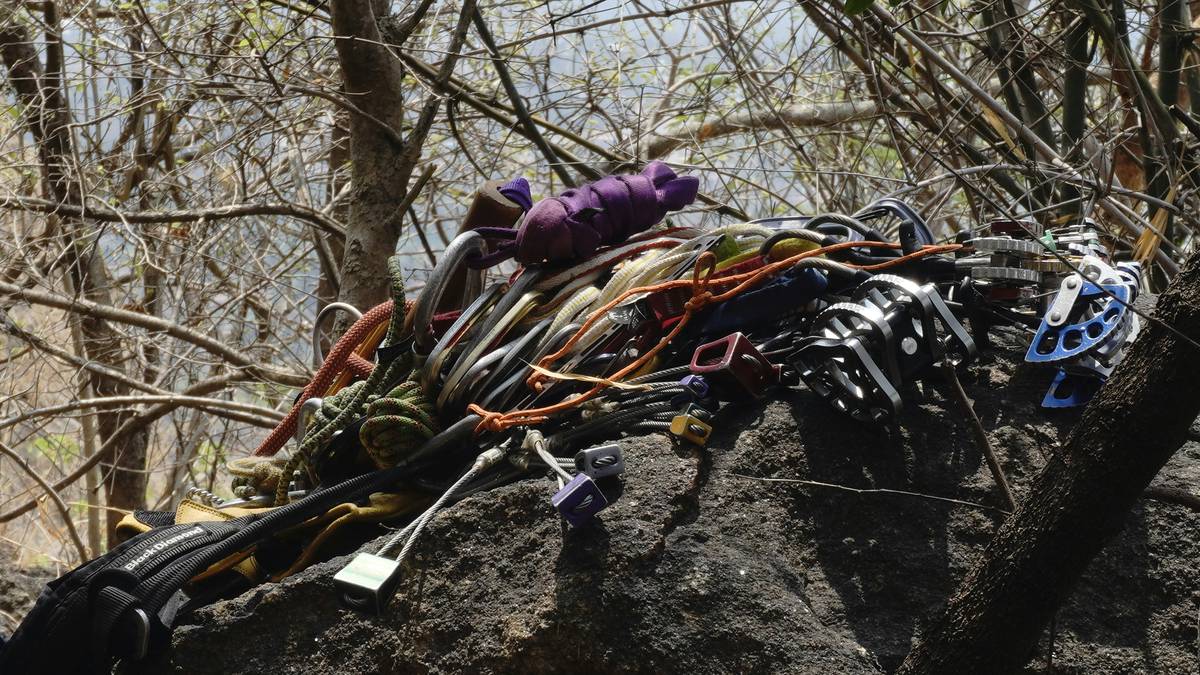
The Industry Secret: Pro Teams Have Been Doing This Since the ’90s
Here’s something gear manufacturers won’t advertise: elite big-wall teams on El Capitan have quietly used modified hex systems for decades—not as last resorts, but as primary gear on specific pitches.
Why? Cams freeze in desert heat. Springs fail after repeated whipper cycles. But a brass or aluminum hex? Nearly indestructible. When paired with the tension-lock method, they offer a lightweight, silent, and shock-absorbent alternative that doesn’t jam in dirty cracks.
Think about it—John Middendorf’s early aid ladders were littered with modified hexes, not cams. The math is simple: if your life depends on gear that won’t fail in extreme conditions, sometimes “obsolete” is just another word for “battle-tested.”
FAQ
Is a wedge rock locking device safer than a standard hex?
Yes—when rigged with the tension-lock sling method, it resists rotation and pull-out far better than a passive placement alone.
Can I use this technique on lead climbs?
Absolutely. Many experienced trad climbers deploy this on sustained leads where cams are too bulky or expensive to carry multiples.
Do modern climbing brands sell dedicated wedge rock locking devices?
No major brand markets a product by that name—but the technique turns any hex into one. It’s open-source innovation at its finest.